
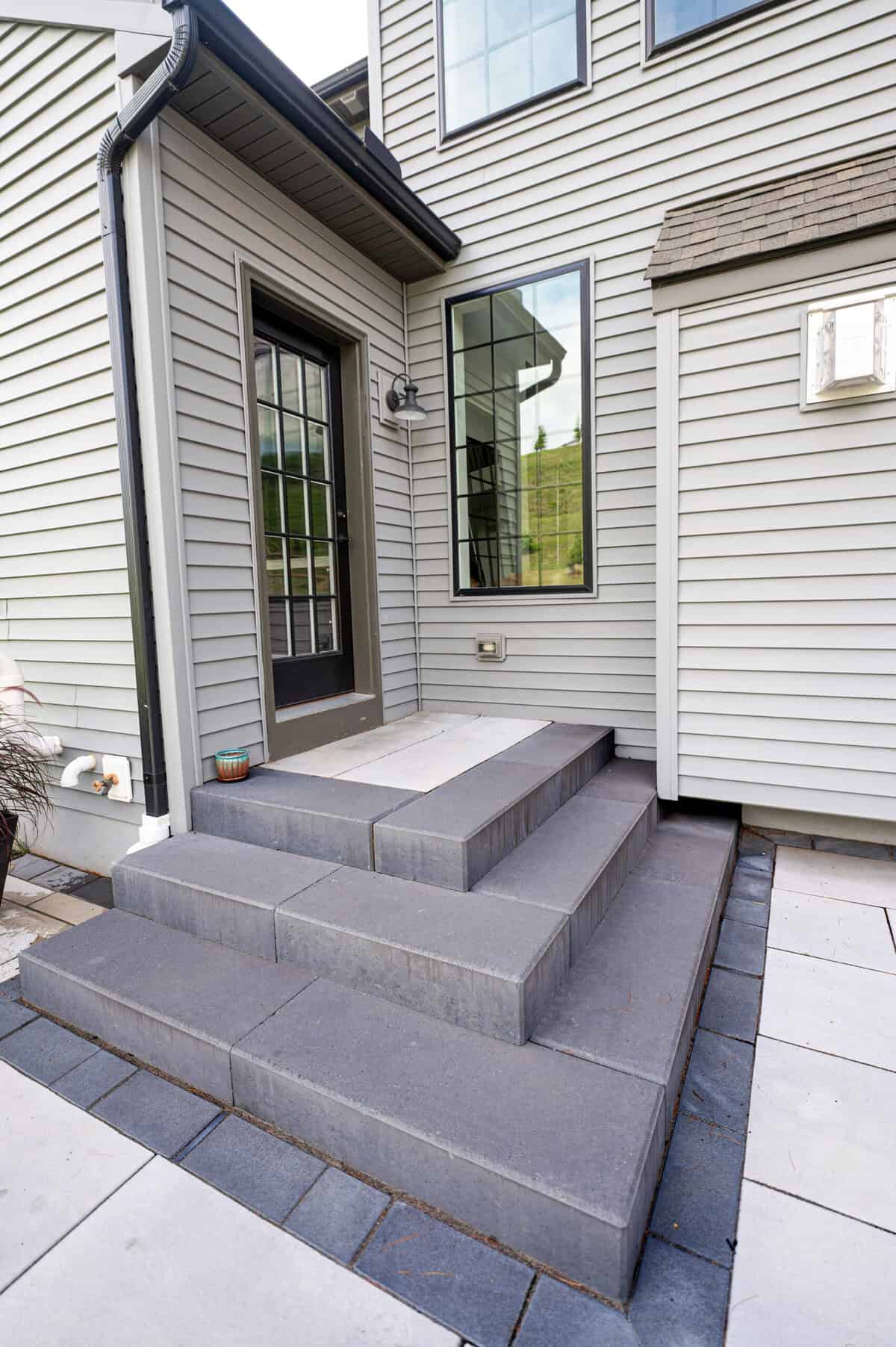

Aerial view showing the geometric precision of a custom Techo-Bloc design.
Wet Cast vs. Dry Cast Pavers: Which is Right for Your Patio?
If you are getting ready to install a new or replacement paver patio or walkway, you have an important decision to make. There are two main categories of concrete pavers: Wet Cast and Dry Cast. Understanding the manufacturing process and the resulting look of each will help you choose the right material for your home.
1. The Manufacturing Process: Understanding “Slump”
The primary difference lies in the water content of the concrete and how it is formed.
-
-
Wet Cast Pavers: As the name implies, this concrete is quite liquid. It has a high slump, meaning it can be poured from a mixer or hopper. To manufacture these, the wet concrete is poured into a mold and vibrated to release air bubbles. Once cured, the mold is stripped away.
-
Dry Cast Pavers: This process uses very little water—it has a consistency more like wet sand and has zero slump. Heavy machinery compresses this dry mix into a mold under extreme pressure.
-
What is a Slump Test?
To measure the workability of concrete, a “slump test” is conducted. A cone is filled with concrete and then removed; the “slump” is the measurement of how much the concrete settles or “slumps” from its original height.
2. Texture, Color, and Size
Because the manufacturing techniques differ, so do the aesthetic results:
-
Wet Cast (The Look of Natural Stone): Because the concrete is liquid, it can pick up incredibly intricate details from the mold. These are often used to mimic natural flagstone or slate. They also allow for bolder, more vibrant colors like jet black or deep reds.
-
Dry Cast (The Classic Choice): Historically, these had more basic textures, but modern technology has come a long way. You can now find beautiful 3- and 4-color blends. Dry cast is often used for classic cobblestone or brick-style looks.
Pro-Tip: An experienced contractor can blend both! For a space your neighbors will envy, try using EP Henry Devonstone (Wet Cast) as your main paver with an Old Town Cobble (Dry Cast) soldier course as an accent border.
3. Strength and Durability
-
Dry Cast: These are incredibly strong due to an optimal water-to-cement ratio and high-pressure compression. They are the standard for high-traffic commercial areas like highways, but they are equally excellent for residential driveways.
-
Wet Cast: While perfectly durable for residential patios, pool decks, and walkways, they are generally not used for heavy-duty commercial roadwork.
4. Price and Sealing Considerations
-
Budget: Generally, Dry Cast pavers are more economical. If you are working within a tighter budget, dry cast offers a high-end look at a lower price point.
-
Sealing: This is a vital step for longevity. Dry cast pavers are more porous and “thirsty,” meaning they absorb sealers readily. Wet cast pavers have a denser, smoother surface and are often pre-sealed at the factory. Always check if your wet cast product already has a factory seal before applying additional coats!
Comparison Summary
| Feature | Wet Cast Pavers | Dry Cast Pavers |
| Consistency | Liquid (High Slump) | Damp Sand (Zero Slump) |
| Primary Look | Natural stone, intricate textures | Clean lines, classic pavers |
| Strength | High (Residential) | Extremely High (Commercial Grade) |
| Price Point | Premium | Economical |
| Best For | Patios & Pool Decks | Driveways & Walkways |